IMAGES AND INFORMATION ILLUSTRATING THE PHYSIOLOGY OF BRAIN AND MIND.
video by video. INTENDED FOR INTERESTED HEALTH CARE PROFESSIONALS.
Correlating macroscopic MRI findings to the pathogenesis and microscopic and molecular background of brain diseases
The idea for “Brain – bit by bit” came to my mind about 15 years ago when I was reminded how important it is to understand the nature of a disease as well as your MRI scanner and basic physics of the sequences.
As a senior radiology resident I reported an MRI of the brain of a middle-aged patient. The cortex was looking diffusely abnormal and hypointense. I read that the patient had diabetes since decades, a history of depression and seizures. Thinking of the “diabetes bronze” described in Harrison’s, and knowing how cortical involvement can lead to convulsions, I consulted the ward doctor. I told my colleague I did not know the exact nature of the disease, but it might have something to do with iron metabolism. Additional blood test showed one of the rarer iron metabolism disorders.
There was a comparative scan of this patient, made 5 years earlier, briefly after the new 3T scanner had been set up in our hospital. This initial scan had been interpreted as normal by the professor in neuroradiology, a very knowledgeable doctor. The diffuse cortical abnormality was already visible, and not recognised because nobody had experience with the 3T image and there was not a specific clinical question.
Neuroradiology requires understanding the (patho)physiology of the brain and familiarity with the normal (MR) image. Whenever the physiology of the brain becomes too complicated for me, I go back to the understandable point in embryology, back to the neural tube, before the neurons and glial cells started to move and intertwine.
I decided to make Brain bit by bit videos to share and show what I learned and know about different brain diseases, commenting on the radiological macroscopic picture and discussing what happened and happens at the microscopic, invisible cell level. This knowledge enables not only recognition of focal, obvious lesions in the brain but also diffuse, subtle disease that has just as much impact on life. And with the rise of molecular medicine, I hope the information will contribute to the role of radiology in the future.
If you want to correct or add a little bit (in the comments under the videos), that is appreciated.
Basics and background by location
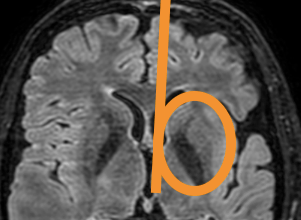
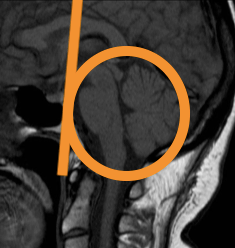
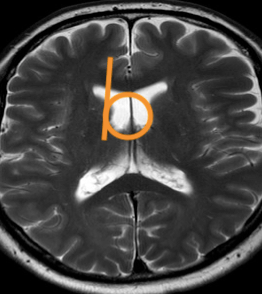
This is on a personal title. All images are from internet and literature. The references are mentioned on the slides, and highly recommended if you want to know more about the subject. Comments and additions on the vlogs are appreciated.
Target audience: neurologists, neurosurgeons, pathologists, radiologists, psychiatrists and researchers/neuroscientists.
 Brain - bit by bit